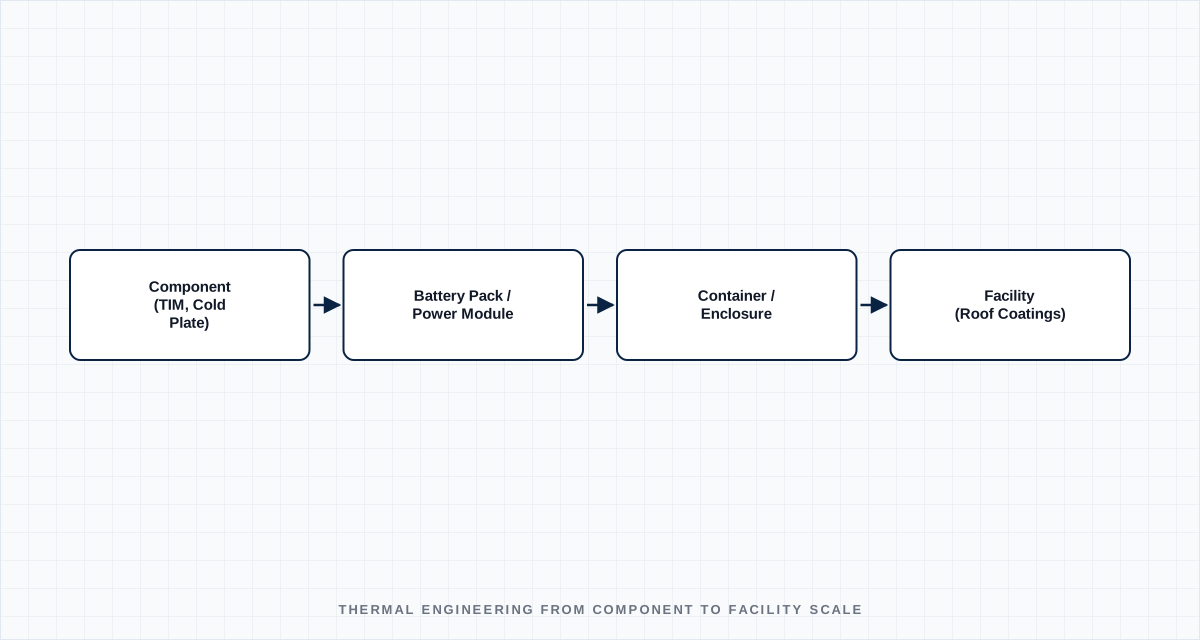
Thermal problems in power electronics rarely originate at the scale they're discovered at. A field failure that shows up as a facility-level heat problem often traces back to a component-level thermal interface decision made years earlier; a component that overheats on a production line often traces back to an enclosure-level airflow assumption nobody validated at the system level. Treating thermal management as one discipline across every scale — component, pack, enclosure, facility — is what catches these before they compound.
Component-level thermal design
At the component level, the work is choosing and validating the thermal interface — gap pads, thermal grease, phase-change materials — against the actual mounting pressure, bond-line tolerance and production temperature range the application will see, not the datasheet's idealized test condition. For power modules in traction inverters and battery packs, this means cold-plate design sized to the module's real switching losses and duty cycle, not a generic thermal budget carried over from a previous program.
System and enclosure cooling
At the system level, liquid cooling loops for containerized ESS and cold-plate networks for multi-module power electronics assemblies have to be designed against the enclosure's actual airflow, ambient temperature range and maintenance access constraints — not validated in isolation and then dropped into a container design after the fact. A cooling loop that performs well on a bench, tested in a controlled lab environment, can still be undersized once it's handling a container's real thermal load in a real climate.
Facility-level heat reduction
At the facility level, radiative cooling coatings and building-envelope thermal design address the heat load a manufacturing facility or data center generates before it ever reaches component-level cooling systems — reducing the baseline thermal burden that every downstream cooling system, from HVAC to liquid loops, otherwise has to absorb. It's the thermal engineering equivalent of fixing the problem upstream instead of over-engineering every system downstream to compensate for it.