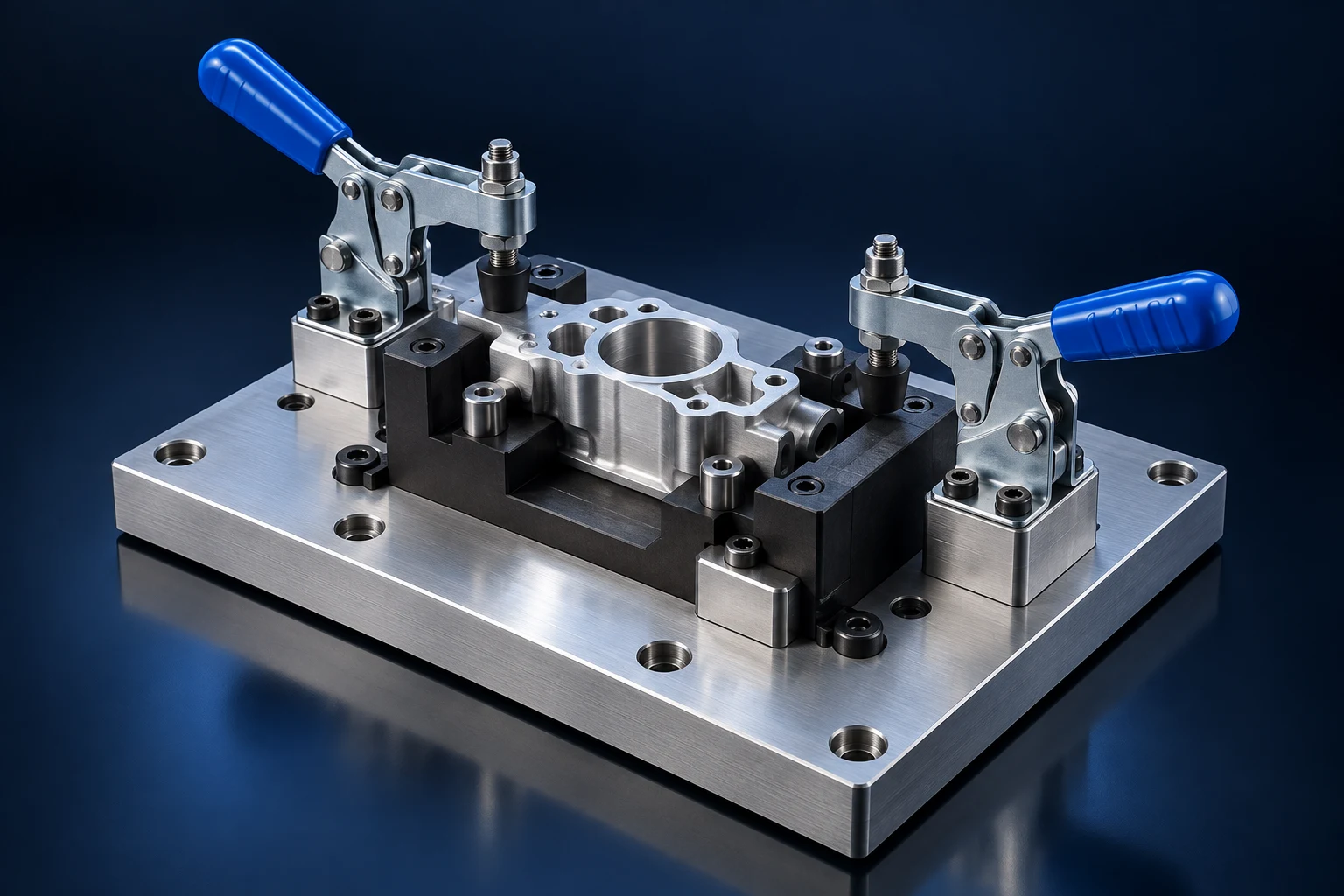
Tooling designed around the operation
NexBridge helps international manufacturing and engineering teams scope, design and source custom jigs and fixtures through manufacturers in Vietnam. Start with a part drawing, an existing fixture concept or a production operation that needs more consistent positioning and handling.
We define the workpiece interfaces, locating strategy, clamping requirements and acceptance method before committing the tooling design to manufacture.
Assembly, inspection and test applications
- Assembly jigs: locating nests, alignment tooling and holding fixtures for component positioning and fastening.
- Inspection fixtures: support and reference features for checking agreed dimensions or assembly conditions.
- PCBA support and test tooling: board carriers, assembly supports and functional test fixture mechanics, with electrical interfaces and test equipment scoped separately.
- Process-specific fixtures: custom workholding requirements reviewed against the operation, equipment interfaces and loading conditions.
Automotive electric motor test fixtures
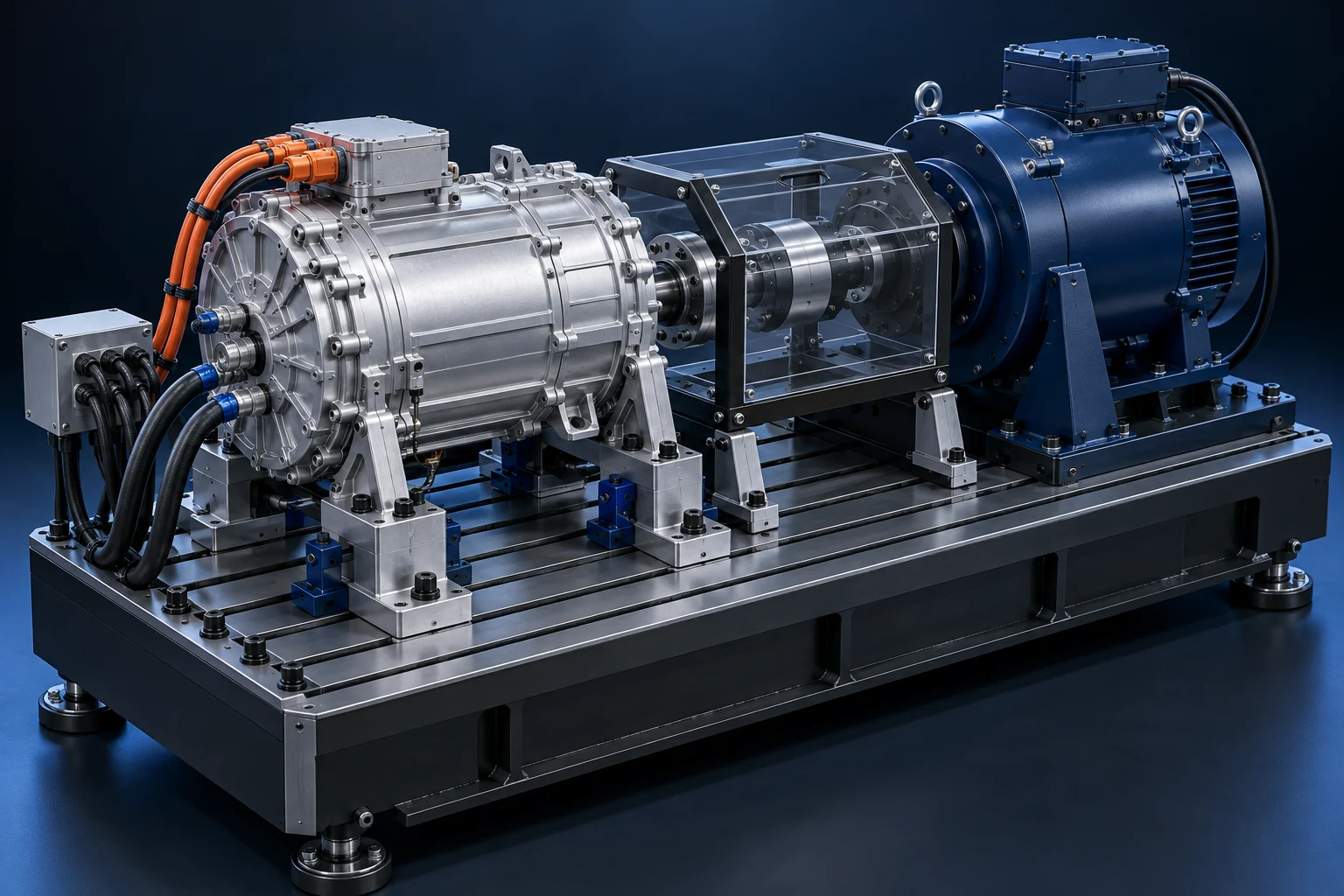
Custom mechanical fixtures can support automotive electric motor test setups through motor mounting adapters, locating features, shaft alignment provisions and interfaces to the test-bed. The design brief defines the motor envelope, mounting datums, load cases, operating range and access for cooling, cables and instrumentation.
For a dynamometer-based setup, the fixture scope is reviewed alongside the coupling, load machine, guarding and test equipment interfaces. Inverter control, power supply, data acquisition and the complete test system are separate work packages unless explicitly included in the quotation.
Discuss an electric motor test fixture.
Review the details that determine usability
The design review considers reference datums, loading and unloading, clamp access, contact surfaces, operator clearance and replaceable wear parts. Where relevant, we also define sensor interfaces, ESD requirements and the access needed for probes or assembly tools.
Cycle time, repeatability and service-life targets are project requirements to validate through an agreed trial. They are confirmed against the application rather than assumed from the fixture concept.
From fixture concept to acceptance
- Define the operation: review the part, workflow, equipment interfaces and current process problem.
- Review the concept: agree locating, clamping, access and the intended inspection or test sequence.
- Build the tooling: coordinate detailed design, purchased items, machined components and assembly.
- Trial and hand over: evaluate with representative parts and an agreed procedure, record findings and close the approved changes.
For PCBA projects, functional testing also requires defined test coverage, firmware, electrical interfaces and any customer-supplied instruments. These responsibilities are agreed before the fixture build.
What your team receives
The agreed package may include an assembled fixture, design files in the agreed format, parts list, operating guidance, wear-part information and trial or acceptance records. Design ownership, source-file handover and customer-specific documentation are confirmed at kickoff.
Prepare a jig or fixture RFQ
Provide the workpiece model and drawings, operation description, critical datums, expected throughput, available space and equipment interfaces. Include representative parts or sample availability, acceptance criteria, required quantity and destination.
Contact us to arrange confidentiality and file sharing. Discuss your jig or fixture project.