Automation projects rarely fail because a PLC or a robot arm was the wrong equipment choice. They fail in the space between individually-tested automation cells and the integrated line those cells are supposed to become — a gap that's invisible in any single cell's commissioning test and only shows up once the whole system runs together.
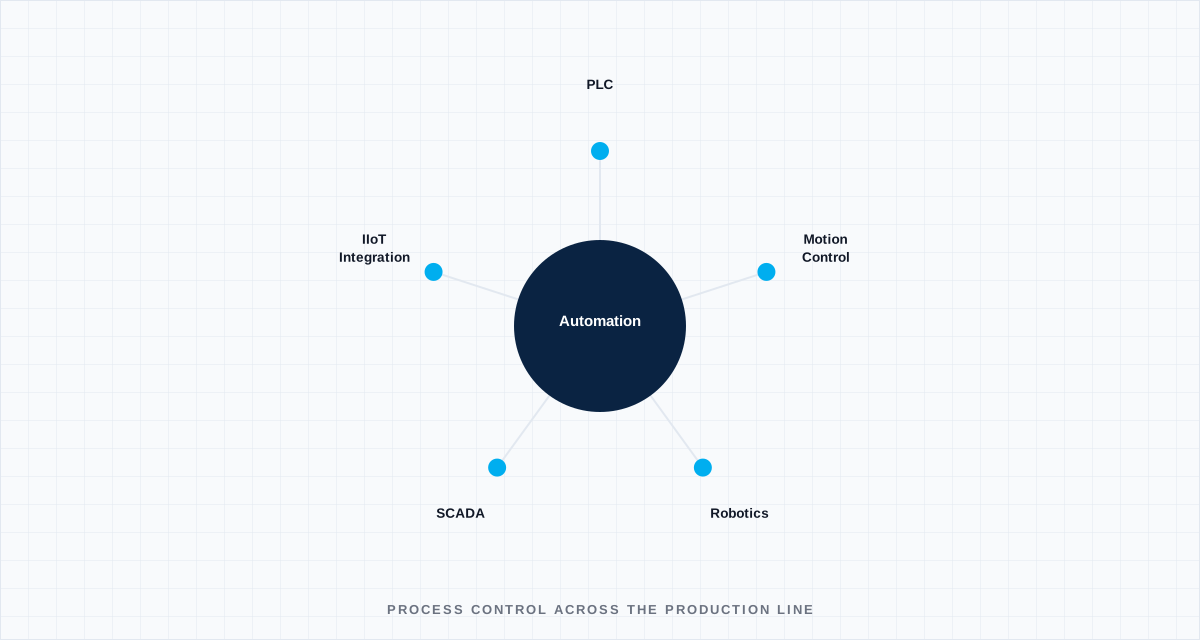
PLC and motion control for high-volume lines
For high-volume automotive PCBA lines — building 6-in-1 drive units and traction inverters at production rate — PLC program architecture and motion control sequencing get designed against the line's actual cycle-time budget and equipment tolerances, with network load and inter-cell handoff behavior treated as a first-class requirement from the start, not a integration-phase afterthought.
SCADA and dispatch-level control
At the site level, SCADA-based dispatch control for grid-scale battery storage has to enforce the same command-validation discipline that prevents a "user error" dispatch incident from actually being a design gap wearing an operator's name — the interface should reject an invalid command before the underlying system ever has to.
IIoT integration without the integration gaps
IIoT and MES connectivity designed as a first-class requirement during PLC program architecture — not bolted on after the control logic is finished — is what prevents the two most common automation integration failures: a control program modified under time pressure to expose data it wasn't structured for, and a data layer polling at a rate the network can't sustain once the full line is live.