An industrial network doesn't get to fail gracefully the way an office network can. A dropped packet on a corporate Wi-Fi network is an inconvenience; a dropped packet on a network carrying a BESS dispatch command or a safety-rated PLC signal is a control-loop failure. Industrial networking has to be engineered against that reality from the start — for uptime and deterministic real-time behavior, not just throughput.
Built for real-time data, not office IT
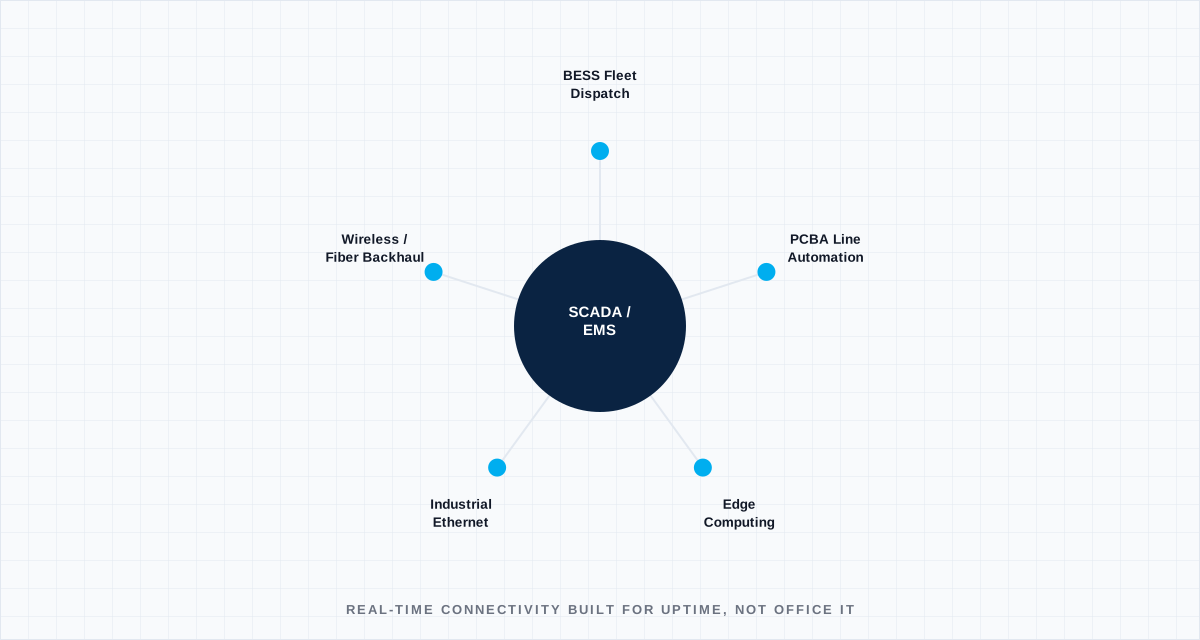
Industrial Ethernet, fiber backhaul and industrial-grade wireless each get selected against the application's actual latency and reliability requirements — a SCADA polling loop, a safety interlock signal and a bulk data upload have very different tolerance for jitter and packet loss, and treating them as interchangeable "network traffic" is how a network passes its commissioning test and still causes field issues once real load and real interference are on it.
Connecting distributed BESS fleets
A fleet of grid-scale storage sites needs SCADA and EMS connectivity that stays reliable across sites with very different backhaul options — fiber where it's available, cellular or wireless where it isn't — without the dispatch and monitoring layer treating those paths inconsistently. We work through the connectivity architecture for distributed fleets against the actual communication infrastructure available at each site, not a single reference design assumed to apply everywhere.
Networking for automated production lines
Automated PCBA lines and EV component production cells generate real-time data — cycle times, quality metrics, IIoT sensor feeds — that has to move across a shared industrial network without contending with the deterministic control traffic the same network is carrying. Getting the network architecture right here means segmenting and prioritizing traffic before commissioning, when the line was still being designed cell by cell, rather than discovering the contention once every cell is joined onto the same backbone.