Most engineering consulting failures aren't a knowledge gap — they're a matching problem: applying a generic checklist or a standard technology recommendation to a project whose actual constraints (grid-code compliance, functional safety level, production volume, thermal budget) were never genuinely interrogated before the recommendation was made. Consulting that starts from the real requirement, not a template, is a different and slower process — and it's the one that actually holds up under contact with hardware.
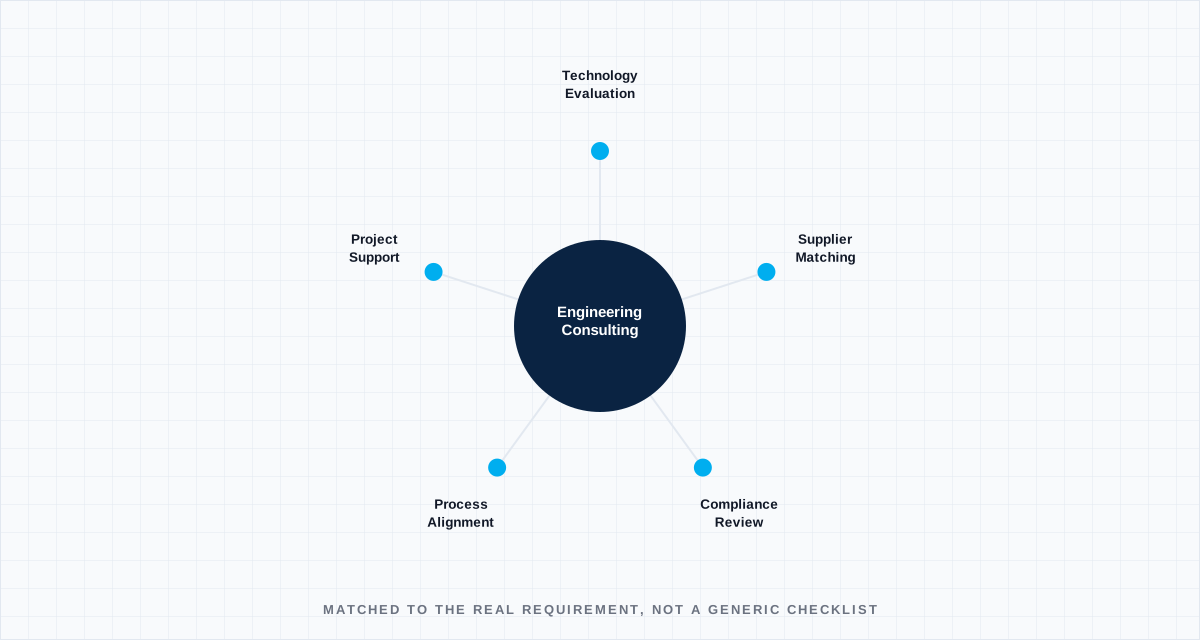
Technology evaluation matched to the application
Technology evaluation starts with the application's real operating envelope and compliance requirements — grid-code and dispatch behavior for a BESS program, functional safety level and ASPICE process maturity for an automotive E/E architecture — before any specific component or vendor enters the conversation, so the evaluation criteria are built from the requirement instead of retrofitted to justify a preferred option.
Supplier matching and vetting
Supplier matching means vetting a manufacturer or technology partner against the application's actual requirements — qualification documentation, production capacity at the volume the program actually needs, compliance track record — not just price and lead time, which is where supplier qualification gaps that only show up at volume tend to originate.
Compliance and process alignment
For automotive and safety-relevant programs, aligning a development process with ASPICE requirements or a functional safety standard has to happen from the start of the engagement, not as a retrofit audit before a milestone gate — the difference between a process that's genuinely aligned and one that's been made to look aligned for a specific review.